 ▶9:15
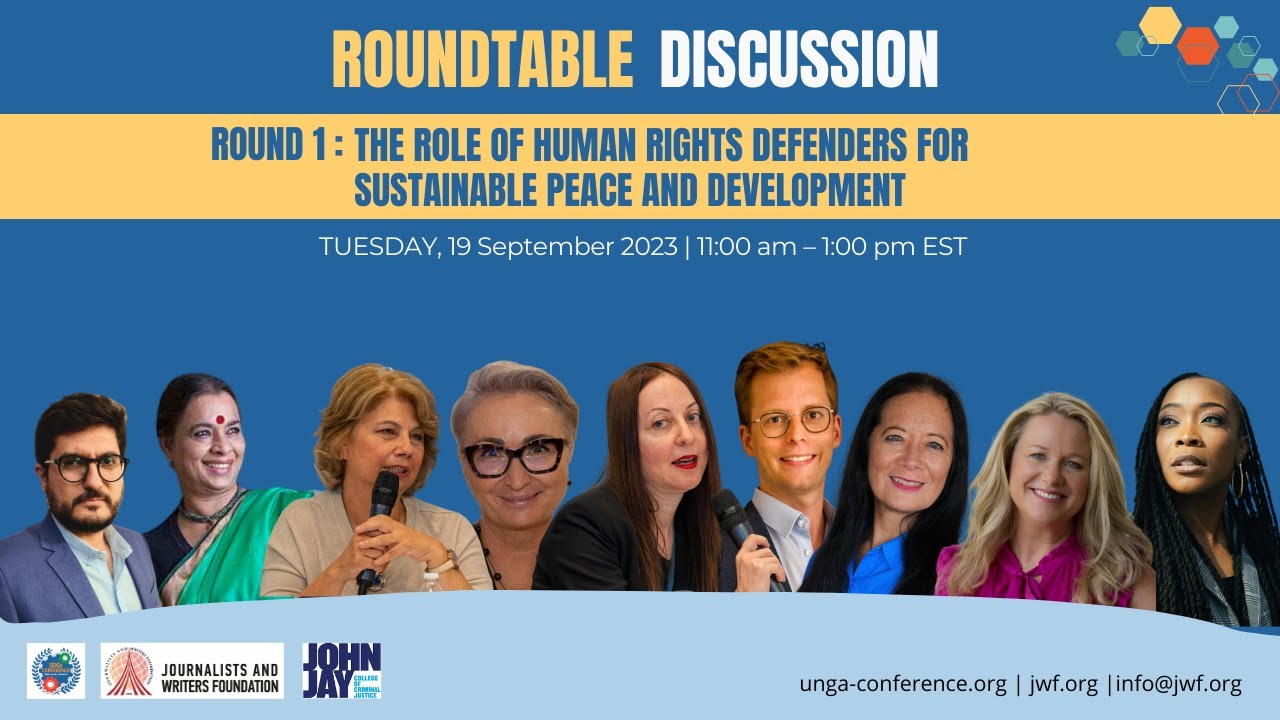
Roundtable Discussion 1: The Role of Human Rights Defenders for Sustainable Peace and Development
Journalists and Writers Foundation JWFRound 1: The Role of Human Rights Defenders for Sustainable Peace and Development September 2023 will mark a critical turning point in the implementation timeline of the Sustainable Development Goals (SDGs). With this current rate of progress and arising geopolitical peace and security complexities, Global Goals are a promise in peril. According to the recently released Sustainable Development Goals 2023 Report, only 15% of the Goals are on track while 48% are severely behind the target lines and 37% even regressed. At the midpoint of the 2030 deadline, delivering on commitments requires civilRead moreShow less
Round 1: The Role of Human Rights Defenders for Sustainable Peace and Development
September 2023 will mark a critical turning point in the implementation timeline of the Sustainable
Development Goals (SDGs). With this current rate of progress and arising geopolitical peace and
security complexities, Global Goals are a promise in peril. According to the recently released
Sustainable Development Goals 2023 Report, only 15% of the Goals are on track while 48% are
severely behind the target lines and 37% even regressed. At the midpoint of the 2030 deadline,
delivering on commitments requires civil society organizations to take the lead on local bases with
their transforming best practices and human rights advocates to create global solidarity to promote
the fundamental rights of all individuals who have been subject to various forms of atrocities as a
result of the current increase of autocracies and gender-apartheid regimes.
UN Secretary-General`s New Agenda for Peace underlines that civil society actors and human
rights defenders play a crucial role in building trust within communities and continue to represent
marginalized groups, socially and politically oppressed individuals boosting a people-centered
peace and security approach. Even though intergovernmental organizations continue to deliver
their call to include CSOs and human rights defenders to close the implementation gap of the SDGs
in its second half, they continue to face various barriers hindering their meaningful participation.
The Round 1 addressed:
§ The importance of a bottom-up approach through the best practices of civil society
organizations
§ Inclusion of civil society members, human rights advocates, women leaders, and young
pioneers in the policy-making stages with inclusive action-oriented strategies
§ How to combat current state-led attacks on civil society members and human rights
defenders shrinking their space, risking freedom of peaceful assembly
§ Tools and skills required to empower youth leadership in local and national decision making
bodies
§ New challenges and barriers eliminating the meaningful participation of civil society
members in establishing peaceful communities: Rise of online harassment, politicized
judiciaries, limited freedom of speech, gender-related barriers.